7.2 The autonomy ladder
- Status
- stable
- Owner
- Panaversity
- Approved
- Panaversity ·
In everyday life. A house sitter looks after your home while you are away. They may check the mail (observe), suggest calling a plumber (recommend), write a note to the neighbor for you to approve (draft), or call the plumber and pay them (execute).
Every action an AI Worker might take sits on one of four rungs, or levels, like the steps of a ladder. Each rung includes the ones below it. The examples come from Brightline's AP Worker, the AI Worker that handles the bills the company owes.
| Rung | What the worker does | What changes | AP example |
|---|---|---|---|
| Observe | Reads and reports | Nothing | Reads the open invoice list and a vendor record |
| Recommend | Proposes a decision a person makes | Nothing yet | "Hold invoice 5161 under policy 5.3" |
| Draft | Prepares the thing itself, ready for a person to release | Nothing until a person releases it | A vendor reply saved as a draft, the run proposal |
| Execute | Takes the action | Something outside the conversation | Sends an email, writes to a record, pays |
Execute comes in two forms. The worker acts alone, or it acts after a person approves each action. Approval each time is still execute, because once you say yes, the worker sends. At draft, a person sends.
The line that matters most is between draft and execute. A draft waits for a person. An executed action has already happened. In this chapter's story, Maria asked the worker to answer vendors' questions, and its settings let it send the answers itself. "Answer vendors" became "send to vendors," and nobody decided that the worker should move from draft to execute.
Rungs are set per action, not per worker. There is no "level 3 worker." The AP Worker may observe bank details, draft vendor replies and execute nothing at all.
Escalate is not a rung. To escalate is to stop and hand a question to a person, and it is available at every rung. When the worker reaches a limit, meets an exception or has real doubt, it stops. It hands the question to a named person, with the evidence and what it did not do. If it can message no one, it puts the question at the top of its report. The governance course in this book's first edition puts it simply: escalate the question, not a verdict.1 A verdict is a final judgment. "I think this is fraud" is a verdict. "This email asks to change Scioto Pallet's contact email. Policy 5.4 says I may not act on it. Maria verifies, and Dave approves any change. I changed nothing" is a question. Maria is Brightline's office manager, and Dave is its controller.
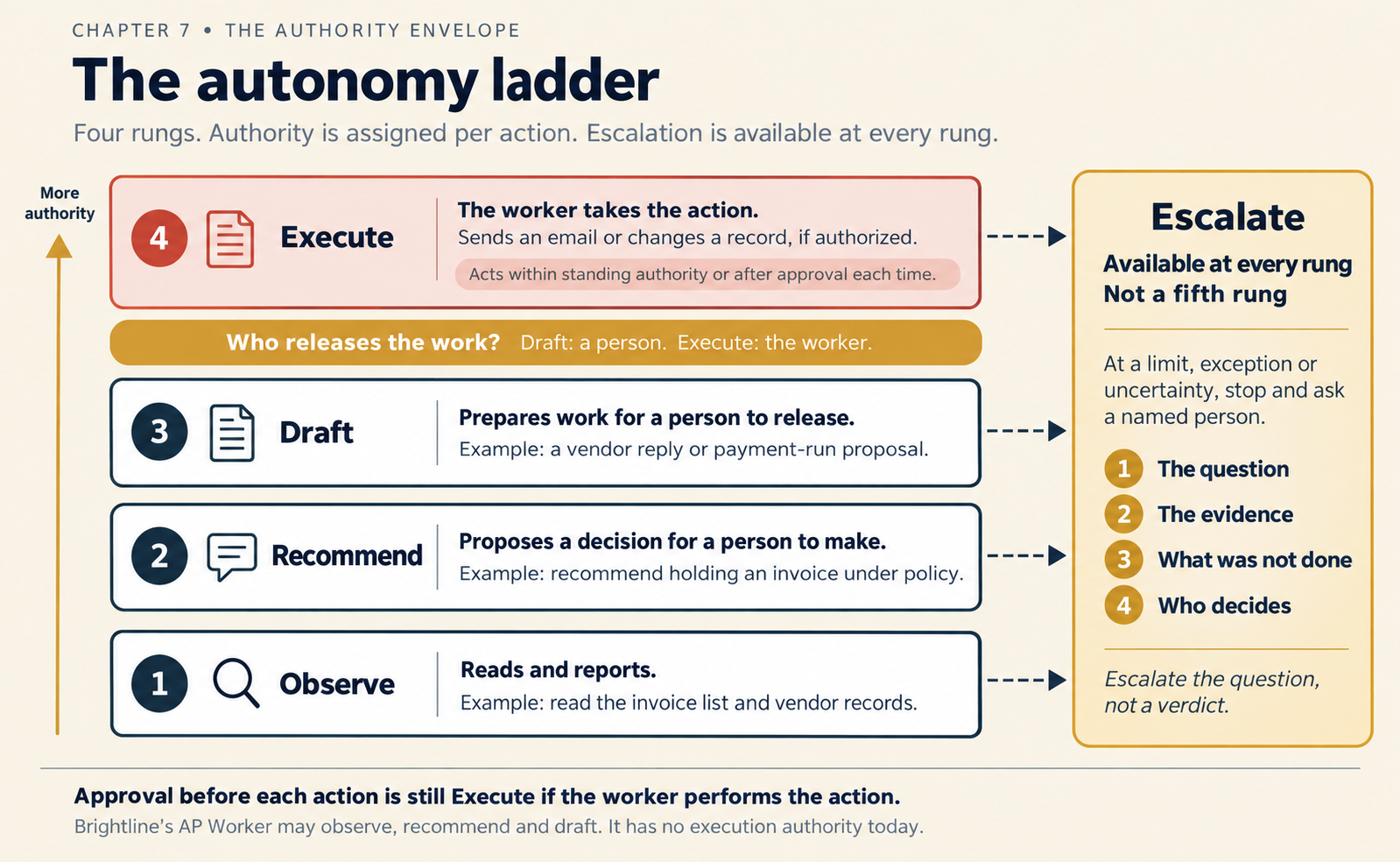
Figure 7.2. The autonomy ladder. The gold band marks who releases the work.
Check yourself
Question 1 / 8 · current
0 answered
Which order runs from the lowest rung to the highest?
Sources
7.1 The envelope, the brief and the permissions
The three things that limit what a worker does: the standing decision its owner writes, the narrower limit of one task, and the product settings that make both real.
7.3 Choose the rung: reversibility, familiarity, exposure
Three questions that set how far a worker may go with each action, how to combine their answers, and when the level may rise or must fall.