3.1 One rhythm in three parts
- Status
- stable
- Owner
- Panaversity
- Approved
- Panaversity ·
In everyday life. You hire a painter. You choose the colors and say which rooms, and you agree that you will walk through the rooms before paying. Then you go to work. When you come home, you check the edges and the trim around the doors and windows, and only then pay.
The book's operating rule has three parts: Humans define intent. AI Workers execute. Humans verify outcomes. The 10-80-10 rhythm is that rule with numbers added. The human defines the first 10 percent, the worker executes the middle 80, and the human verifies the final 10.
The pattern is older than AI. It is often credited to Steve Jobs, and the entrepreneur Dan Martell describes it the same way. In this pattern, you set the vision for the first 10 percent of a project and let a capable team do the middle 80. Then you return for the final 10 to refine and approve.1 The first edition of this book applied it to AI, with AI Workers in the place of the team. Nothing else had to change.
| Part | Who leads | What happens | What it produces |
|---|---|---|---|
| First 10 percent | The human | Intent, scope, authority and the review contract are set | A brief the worker can act on alone |
| Middle 80 percent | The worker | The worker plans, uses its tools and does the work | The output, plus the evidence the contract asked for |
| Final 10 percent | The human | Evidence is reviewed, the output corrected, then approved or sent back | A decision, and work that may leave your hands |
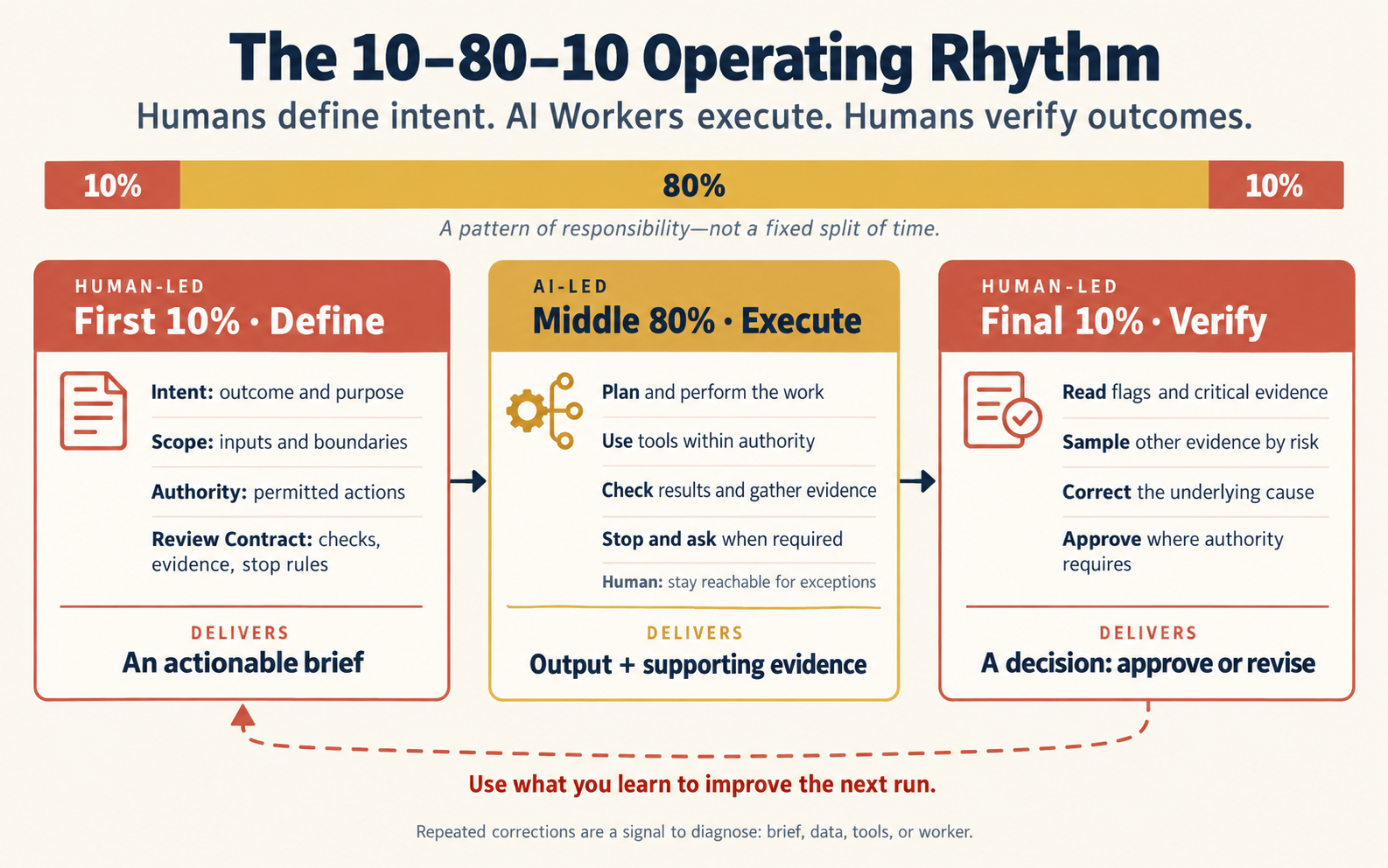
Figure 3.1. The 10-80-10 rhythm. The human owns both ends. The worker owns the middle.
Read the numbers as a shape, not a timesheet. They describe who leads each part of the work, not minutes on a clock. The first time you delegate an unfamiliar task, both ends take longer: you write the brief with care and check the result line by line. A task that has run cleanly every week for months may need five minutes of setup and a quick look at its evidence. The split of responsibility stays fixed while the minutes change. The two ends belong to a person, because judgment, values and accountability cannot be handed over. The middle belongs to the worker, because that is where execution scales, which means the work can grow without taking more of your time.
The rhythm is also why this book teaches managing before building. The skills that matter at both ends are defining work well and judging it well, and every route through the book needs them.
Check yourself
Question 1 / 8 · current
0 answered
In the 10-80-10 rhythm, who leads the middle 80 percent?
Sources
Chapter 3. The 10-80-10 Operating Rhythm
How to run any piece of AI work in three parts, the first 10, the middle 80 and the final 10 percent, at the scale of a task, a worker and a company, and how to tell which part broke.
3.2 The first 10 percent: intent, scope, authority, review contract
The four things you decide before the worker starts, so it can work alone and you can check what it did.